Tips for Brushing and Flossing During Invisalign Therapy
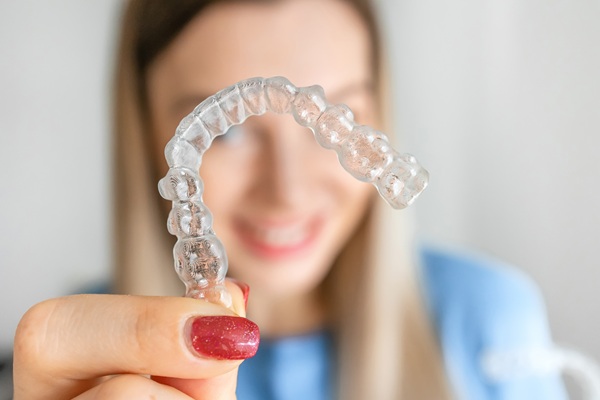
Invisalign® is one of the most popular ways to undergo teeth straightening treatment. However, with that being said, it is still crucial to maintain good oral hygiene throughout the process. Keep reading to find out what a general dentist has to say about brushing and flossing.
A quick guide to oral hygiene during Invisalign® treatment
Outlined below are a few tips on brushing and flossing during Invisalign® treatment. This information comes directly from a general dentist who wants to reiterate the importance of oral hygiene.
1. Brush after every meal
Traditionally, general dentists recommend brushing twice a day; however, when it comes to Invisalign® treatment, it is better to brush after every meal. Because the teeth stay enclosed by the Invisalign® aligners, making sure that any left behind food or debris is cleaned off will go a long way in oral health. Using a soft-bristled toothbrush will ensure that overbrushing does not occur, thus keeping the enamel intact.
2. Floss at least once a day
Flossing at least once a day is always important; however, when it comes to Invisalign® treatment, it is crucial to abide by this. Because the teeth are enclosed by the aligners for the majority of the day, ensuring that left behind food does not remain in between the teeth is important.
3. Be gentle when flossing
During Invisalign® treatment, the teeth are constantly shifting. Of course, this shift is positive because it means the treatment is working. However, because of the constant shift, it is important to understand the sensitivity that is involved. With that being said, when flossing each day, it is necessary to be gentle. Flossing can be difficult especially if there are tight spaces involved. Gently flossing in between each tooth will ensure that the gums stay healthy; however, just remember to be careful when doing so.
4. Use a fluoride-based toothpaste
Toothpaste that contains fluoride can be extremely beneficial to the teeth, especially when undergoing Invisalign® treatment. Because the teeth are enclosed by the aligners for most of the day, the teeth can become susceptible to natural bacterial growth, which can wear down the enamel. Using fluoride-based toothpaste a few times a week will ensure that the enamel stays strong and mineralized.
Other oral hygiene tips during Invisalign® treatment
Aside from the brushing and flossing tips that are listed above, general dentists also recommend rinsing with mouthwash or saltwater a few times a week. Because the aligners enclose the teeth so much, bacteria can naturally grow. Rinsing can keep bacteria at bay while also ensuring good breath.
Talk to a general dentist today
When undergoing Invisalign® treatment, it is advised to continue to follow good oral hygiene. These can go a long way in ensuring that oral health stays in good shape throughout the treatment process. Any additional questions or concerns about oral hygiene can be addressed by a general dentist. To find out more or to get scheduled for an appointment, reach out to our New Rochelle office today.
Request an appointment here: https://newrochellefamilydentist.com or call New Roc Dental: Ovral Wynter, DDS at (914) 380-4548 for an appointment in our New Rochelle office.
Check out what others are saying about our dental services on Yelp: Invisalign in New Rochelle, NY.
Related Posts
A dental filling is a simple yet essential solution for addressing cavities and restoring a tooth's natural structure. Treating decay early with a filling allows patients to preserve their teeth, avoid more extensive procedures, and maintain long-term oral health. This effective treatment not only repairs damage but also prevents further complications that could lead to…
A dental filling can help keep a tooth strong after a cavity treatment. A cavity damages the strong exterior shell of the tooth, called the enamel, leading to a pathway for bacteria to enter deeper into the tooth. When a dentist cleans away the bacteria and fills the hole with a dental filling, most patients…
Curious about dental fillings? Read on to learn more. Tooth cavities can be uncomfortable and a dental filling is necessary to resolve the issue. Your best bet is to prevent the condition from occurring in the first place. That requires a strict oral hygiene routine and regular dental checkups with a general dentist. Dental appointments…
Getting a dental filling for cavities can help improve your oral health. This treatment can seal the tooth and prevent future decay. Knowing how this treatment helps with cavities can convince you to keep dental appointments. Here are the details on how a dental filling can keep your tooth cavity-free.A dental filling is a dental…